Optimizing Open-Plan Workspaces: The Strategic Implementation of 6-8 Person Workstation Module
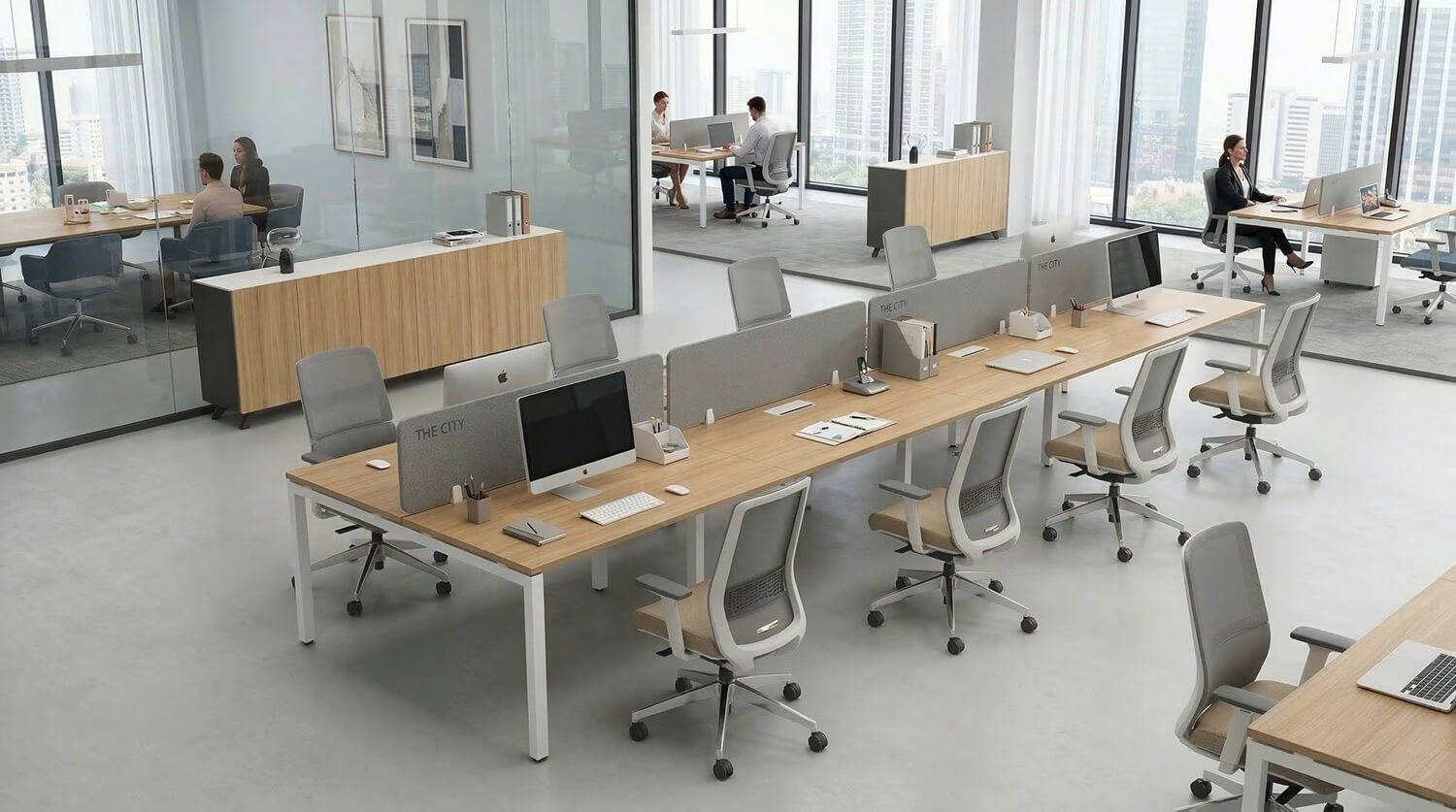
In an era defined by innovation and connectivity, the open-office model has established itself as the global corporate standard. Central to this paradigm shift is the integration of intelligent furniture solutions, most notably the 6-to-8 person workstation cluster. Beyond mere spatial efficiency, these configurations represent a strategic move to foster high-performance collaboration and streamline modern office operations
1. The Strategic Backbone of the Open Office
Open-plan designs aim to dismantle physical barriers to foster transparency. Implementing long workstation clusters provides three core business advantages:
-
Maximum Spatial Optimization: By eliminating redundant gaps between individual units, clusters maximize floor area utilization, allowing for higher personnel density without compromising the sense of openness.
-
Fostering a Culture of Collaboration: 6-person clusters facilitate real-time brainstorming and spontaneous discussions, allowing project teams to iterate rapidly without the logistical friction of relocating to formal meeting rooms.
-
Investment Efficiency: Deploying a unified structural frame for 6-8 seats is significantly more cost-effective than procuring and maintaining individual desk units.
2. Standard Technical Specifications for 6-Person Workstation Clusters
To ensure employee well-being and sustained productivity over extended working hours, enterprises must adhere to the following rigorous technical benchmarks:
2.1. Standard Dimensions: Optimizing Personal Space
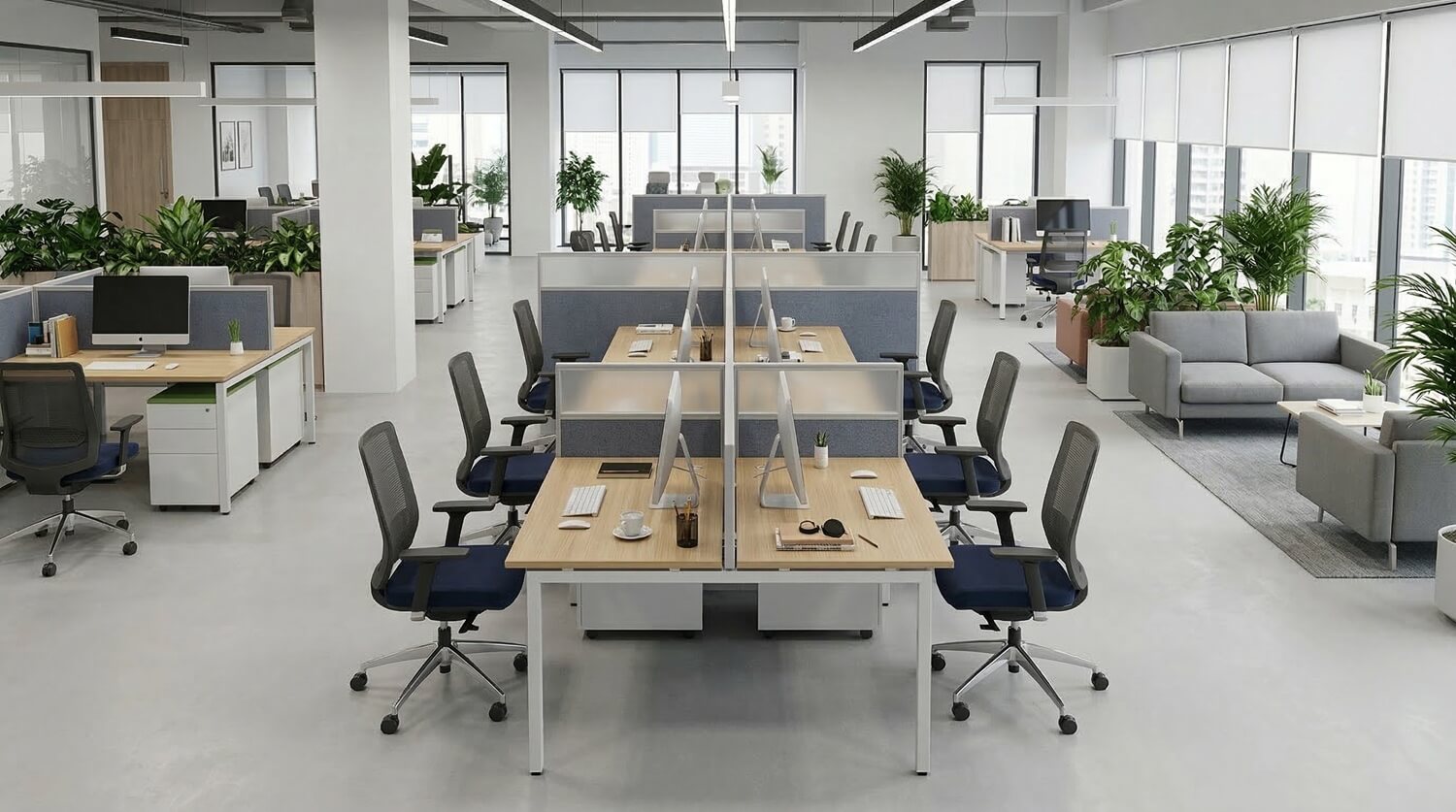
A 6-person cluster, typically configured in a 3-on-3 symmetrical layout, should meet these "golden ratios":
-
Total Length: Ranging from 3.6m to 4.2m. This allows each employee a horizontal span of 1.2m to 1.4m—ample space for dual monitors and documents, while ensuring comfortable elbow room and personal boundaries between colleagues.
-
Overall Width (Depth): Between 1.2m and 1.4m for the entire unit. With a per-side depth of 60cm to 70cm, users can maintain an ergonomically safe focal distance from their screens, mitigating eye strain during an 8-hour shift.
-
Standard Height: Fixed at 750mm. Based on regional anthropometric data, this height promotes an upright posture with feet flat on the floor, effectively preventing long-term musculoskeletal issues such as spinal and neck fatigue.
2.2. Material Integrity and Durability: A Long-term Capital Investment
Material selection dictates not only the aesthetic appeal but also the lifecycle of the furniture in high-frequency usage environments:
-
Industrial Wood Cores: Moisture-resistant MFC or Green-core MDF are the preferred choices. In climate-controlled offices or regions with high humidity, these cores prevent warping, swelling, or structural degradation.
-
Melamine or Laminate Surfaces: These high-performance coatings offer sophisticated wood-grain aesthetics alongside superior resistance to abrasions, heat, and moisture. This is critical for protecting the assets against common workplace mishaps, such as liquid spills.
2.3. Intelligent Infrastructure and Connectivity: The "Pulse" of the Modern Office
A 6-person cluster without integrated cable management quickly becomes a hazardous and disorganized space. Professional technical solutions require:
-
Recessed Power Hubs: Each workstation or pair of stations should feature a flush-mounted hub made of premium aluminum or high-grade polymers, integrating power outlets, USB charging ports, and LAN connectivity.
-
Advanced Cable Management: Under-desk steel trays conceal the entire network of power and data cables. This eliminates "cable clutter" at the employees' feet, simplifies maintenance, and significantly reduces the risk of electrical fires.
3. The Art of Strategic Workstation Placement in Office Environments
The arrangement of workstation clusters is not merely a matter of filling floor space; it is a calculated exercise in traffic flow and lighting optimization...
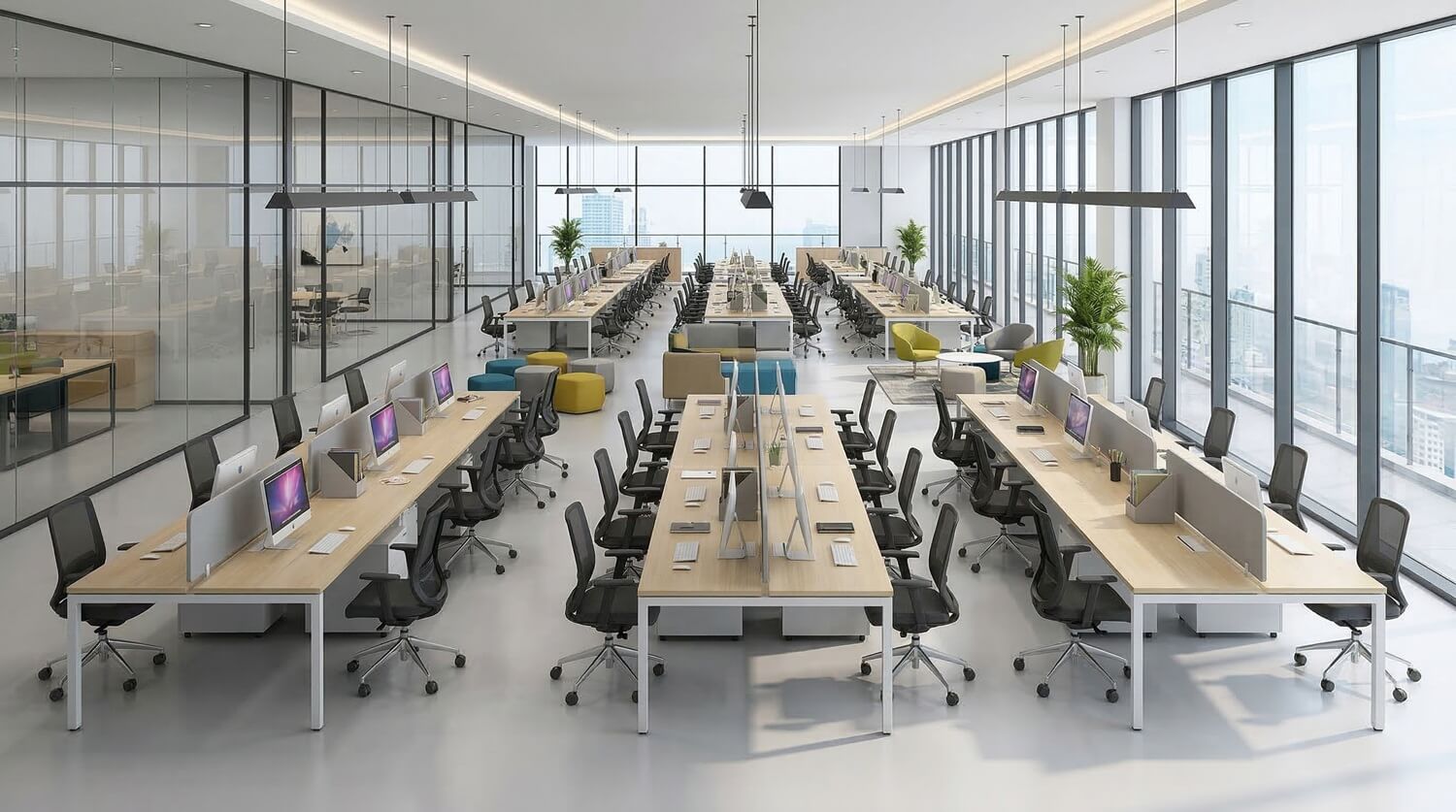
Workstation arrangement transcends mere space-filling; it is a calculated orchestration of traffic flow and natural light optimization:
-
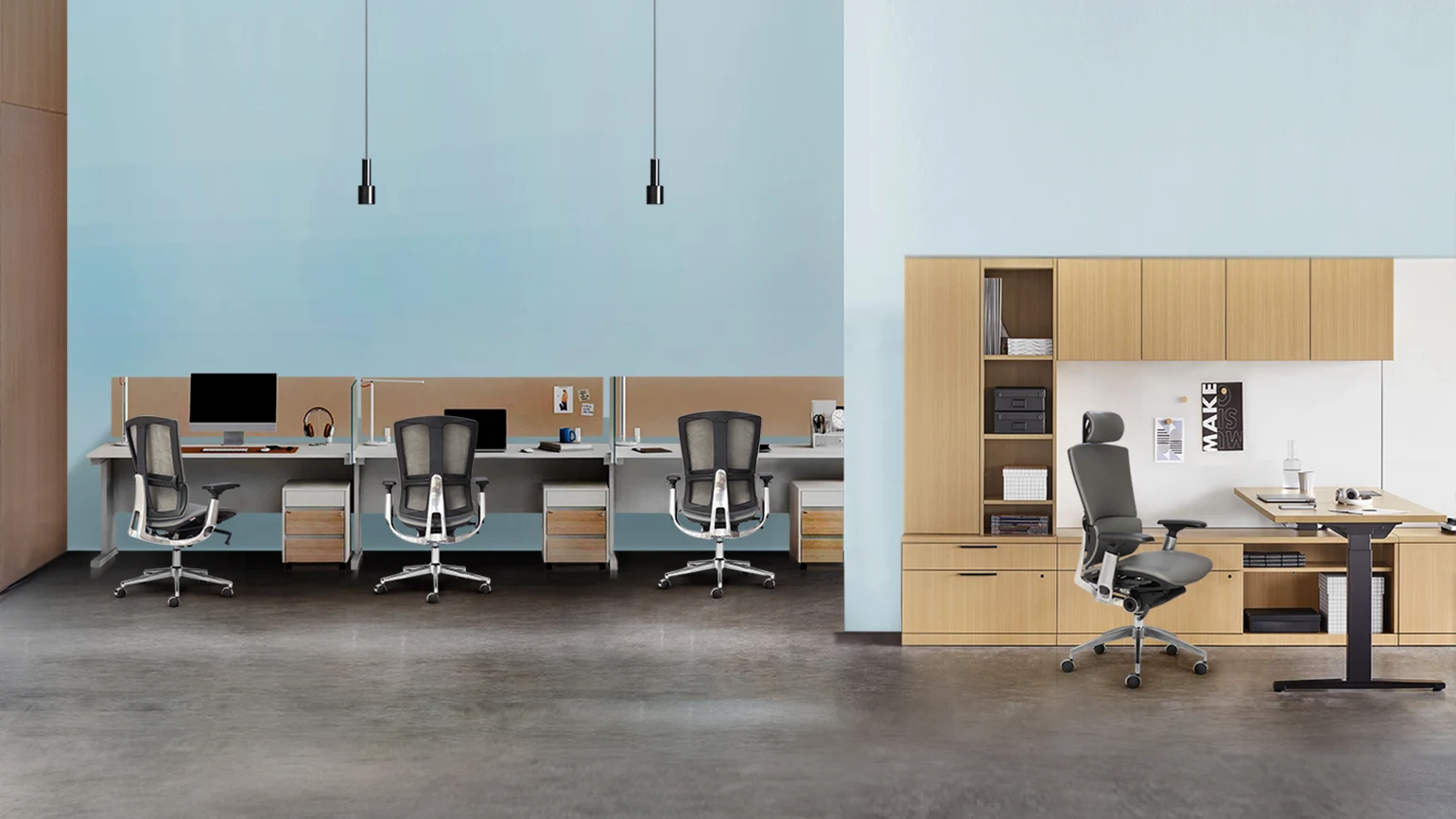
Linear Rows (Parallel Layout): Clusters are positioned in parallel, creating streamlined pathways. This configuration is exceptionally suited for technology firms or software development units requiring high levels of deep work and concentration.
-
Flexible Partition Integration: Utilizing desktop-mounted glass or felt privacy screens allows employees to maintain a private zone for focus without becoming socially isolated from the collective.
-
Biophilic Accents: Integrating hydroponic plants or recessed planters along the central axis of the cluster "softens" the industrial feel of technology-heavy environments, fostering a more tranquil and productive atmosphere.
4. 2026 Design Trends: The Zenith of Minimalism and Versatility
As we move into 2026, the design of 6-person workstation clusters has evolved beyond basic utility. Enterprises are now prioritizing sophistication, sustainability, and personalization. Here are the three leading trends defining the market:
4.1. Powder-Coated Steel Systems: The Intersection of Durability and Artistry
Modern workstations have moved away from bulky, unrefined frames. The 2026 systems utilize precision CNC-cutting technology and premium matte powder coating for a refined finish.
-
Diverse Aesthetics: Options range from authoritative U-frames and bold Industrial X-frames to elegant Scandinavian-inspired tapered legs.
-
Modular Intelligence: These systems are engineered as modular components, making it remarkably simple to dismantle, relocate, or scale a 6-person unit into an 8 or 10-person configuration without disrupting the office infrastructure.
4.2. Neutral Palettes and Eco-Conscious Materials
This year's color trends prioritize "healing" tones that enhance the perception of space:
-
Core Palettes: Pure white, concrete grey, and light grey are favored for their high luminosity, keeping the office bright and vibrant.
-
Natural Wood Grains: Oak and Maple patterns in pale yellow or light brown introduce warmth, effectively reducing workplace stress.
-
Sustainable Benchmarks: The use of recycled materials or wood adhering to E0 and E1 standards (near-zero formaldehyde emissions) has become a mandatory requirement for premium "Green Office" certifications.
4.3. Integrated Cabinetry and Personalized Storage Solutions
In an open-plan environment, maintaining order is a significant challenge. Modern 6-person clusters address this through:
-
Mobile Pedestals: Compact under-desk units equipped with multi-directional casters and digital or RFID locks for secure personal storage.
-
Supporting Sideboards: Desk-height cabinets that serve a dual purpose: providing structural support and expanding the surface area for shared peripherals like printers, plants, or communal archives.
-
Slatwall-Integrated Accessories: Modern partitions feature integrated grooves (Slatwalls) for mounting pen holders and note boards, completely decluttering the primary work surface.
4.3. Integrated Cabinetry and Personalized Storage Solutions
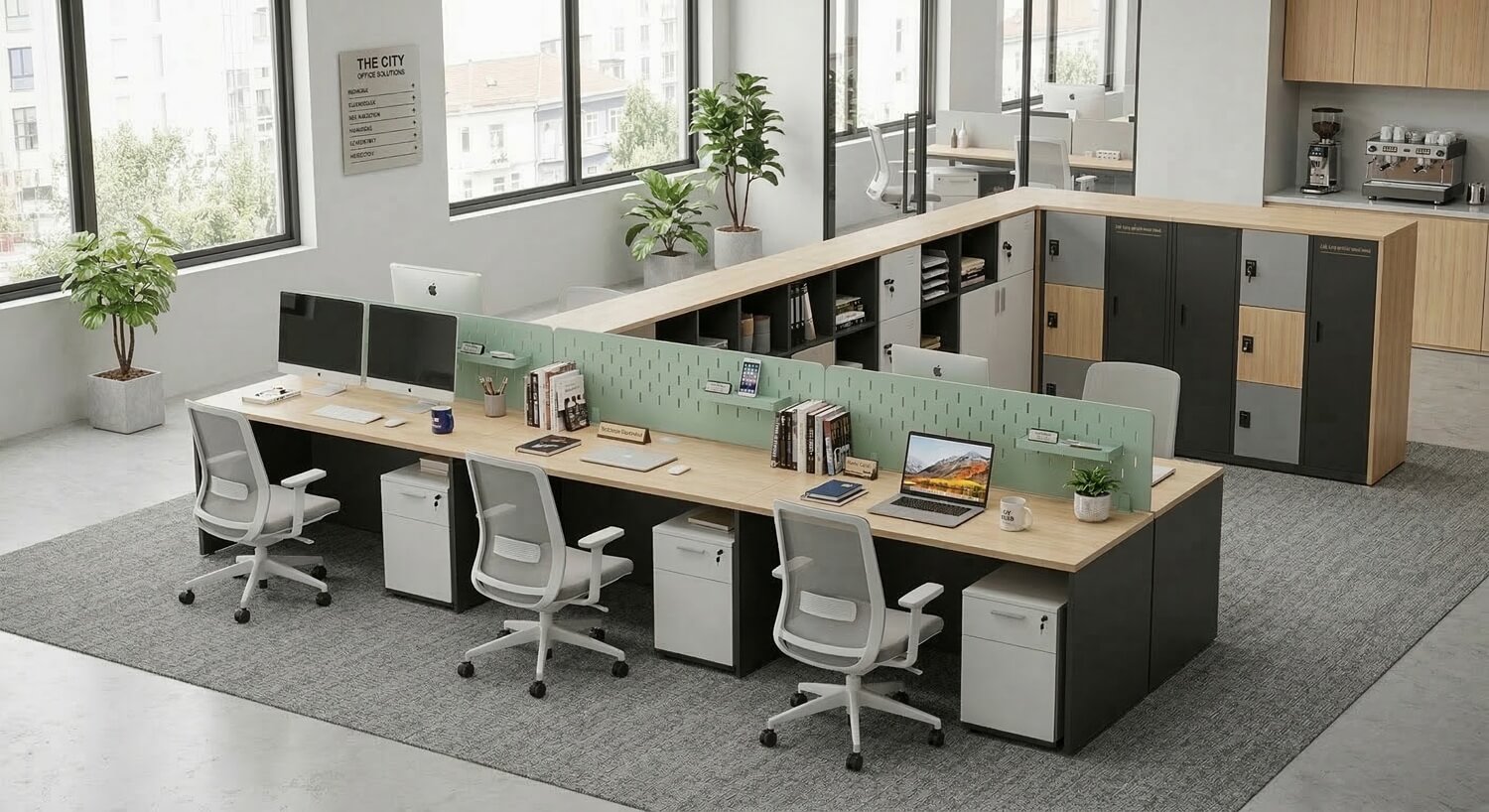
Maintaining organizational order within an open-plan environment remains a significant challenge. Modern 6-person workstation clusters address this through a suite of integrated solutions:
-
Mobile Pedestals: These compact under-desk units feature multi-directional casters for flexibility. For enhanced security, they are often equipped with digital or RFID locks to safeguard personal documents and belongings.
-
Integrated Sideboards: Designed to match the desk’s height, these units serve a dual purpose: providing structural support for the tabletop while expanding the usable surface area for shared peripherals such as printers, office greenery, or communal archives.
-
Accessory-Integrated Partitions: Beyond providing privacy, modern partitions now feature built-in Slatwalls. These tracks allow employees to mount pen trays, note boards, and organizers, effectively "lifting" clutter off the desk to maximize the primary work zone.
5. Conclusion
Designing an open-plan workspace around 6-8 person workstation clusters is far more than a simple interior arrangement; it is a testament to an organization’s commitment to professionalism and the employee experience. By prioritizing connectivity, modular flexibility, and spatial optimization, businesses are not just furnishing an office—they are building the foundation for a high-performance, future-ready work culture.