Smart Height-Adjustable Desks: The Optimal Solution for IT & Tech Workspaces
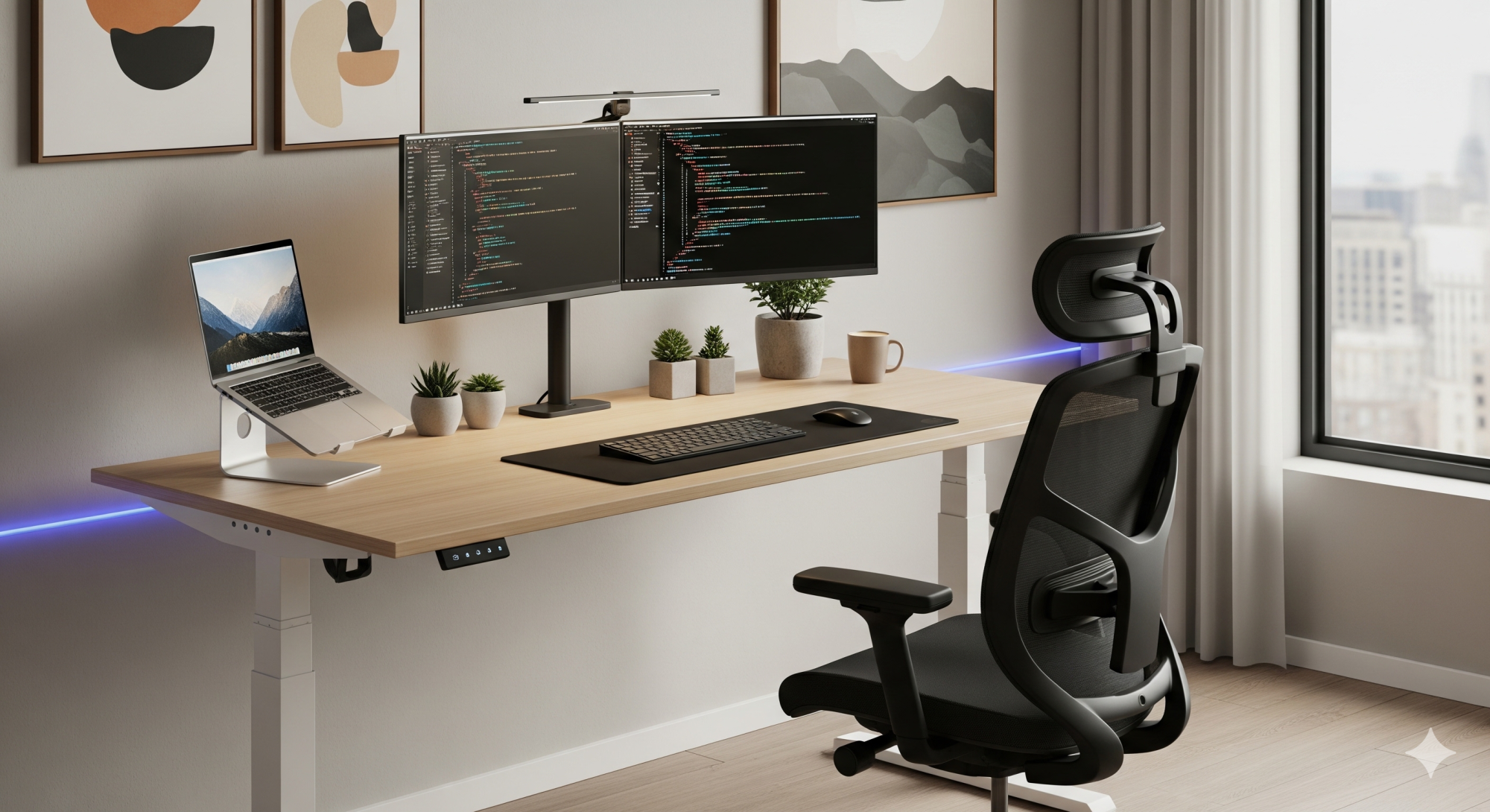
1. The Productivity Equation: Why Sedentary Habits Are the Enemy of Innovation
The hallmark of the IT industry is "Deep Work" - a state of intense, uninterrupted concentration. However, remaining physically stationary for prolonged periods causes stagnation in blood circulation, leading to lethargy, reduced cerebral oxygenation, and chronic spinal pathologies.
From a CTO's perspective, a 20% drop in late-day productivity due to physical fatigue represents an invisible yet substantial operational drain. Smart Sit-Stand Desks facilitate dynamic postural shifts, breaking the cycle of inactivity. Scientific research confirms that alternating between sitting and standing heightens focus, fuels creativity, and allows developers to sustain the "Flow" state longer when navigating complex algorithms.
2. A Competitive Edge in the War for Talent
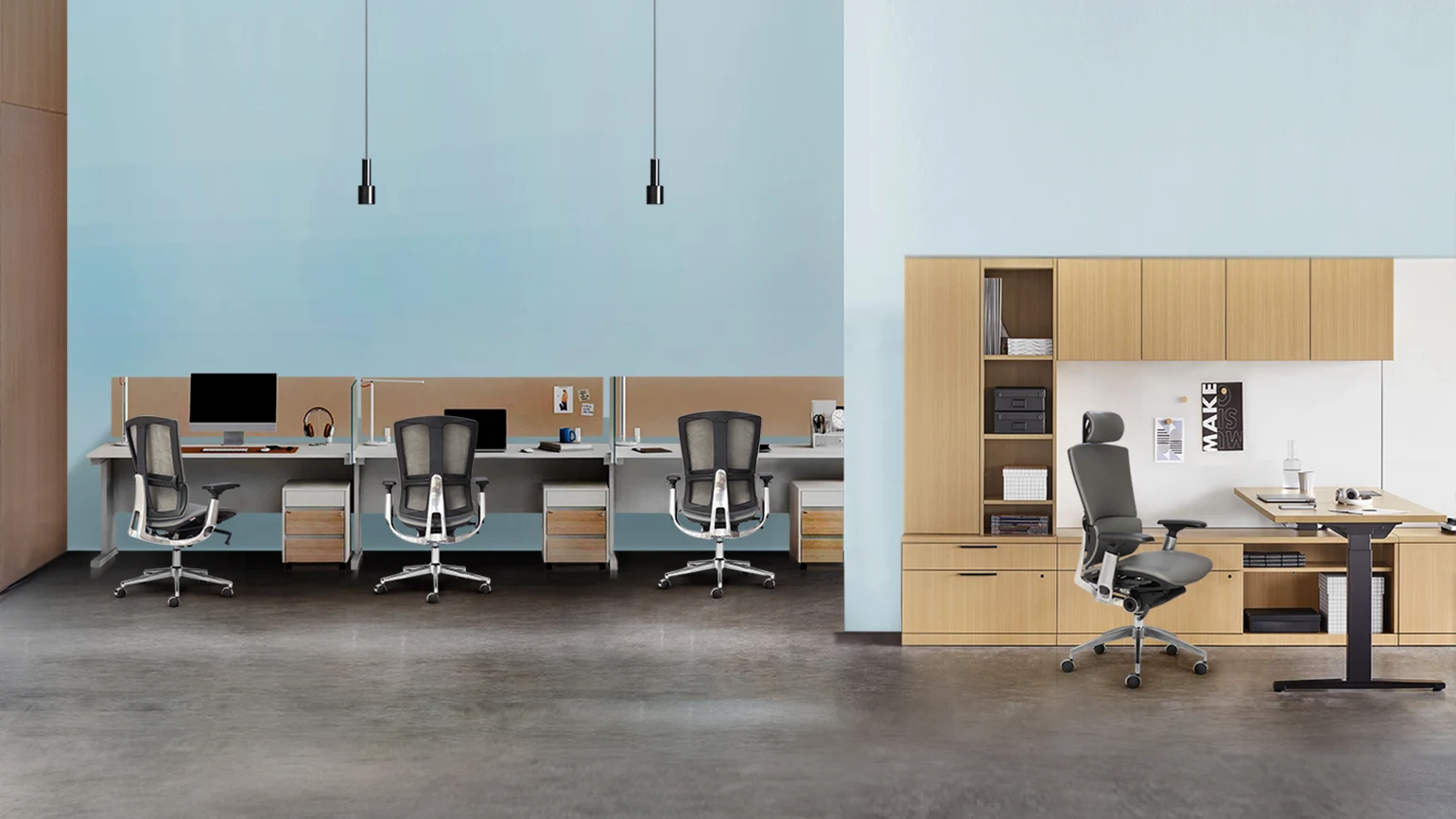
In the fiercely contested IT recruitment landscape, compensation is no longer the sole differentiator. A "Silicon Valley-standard" workspace, anchored by advanced Ergonomics, is the most vivid testament to a leadership team’s commitment to its workforce.
-
Strengthening Employer Branding: When a Senior candidate enters an office and observes a sophisticated sit-stand ecosystem, they immediately recognize an environment that prioritizes long-term health and sustainable development.
A Human-Centric Message: Investing in smart desking is the most direct way to communicate to your team: "We value your well-being as much as your code." This builds a culture of loyalty that a paycheck alone cannot buy.
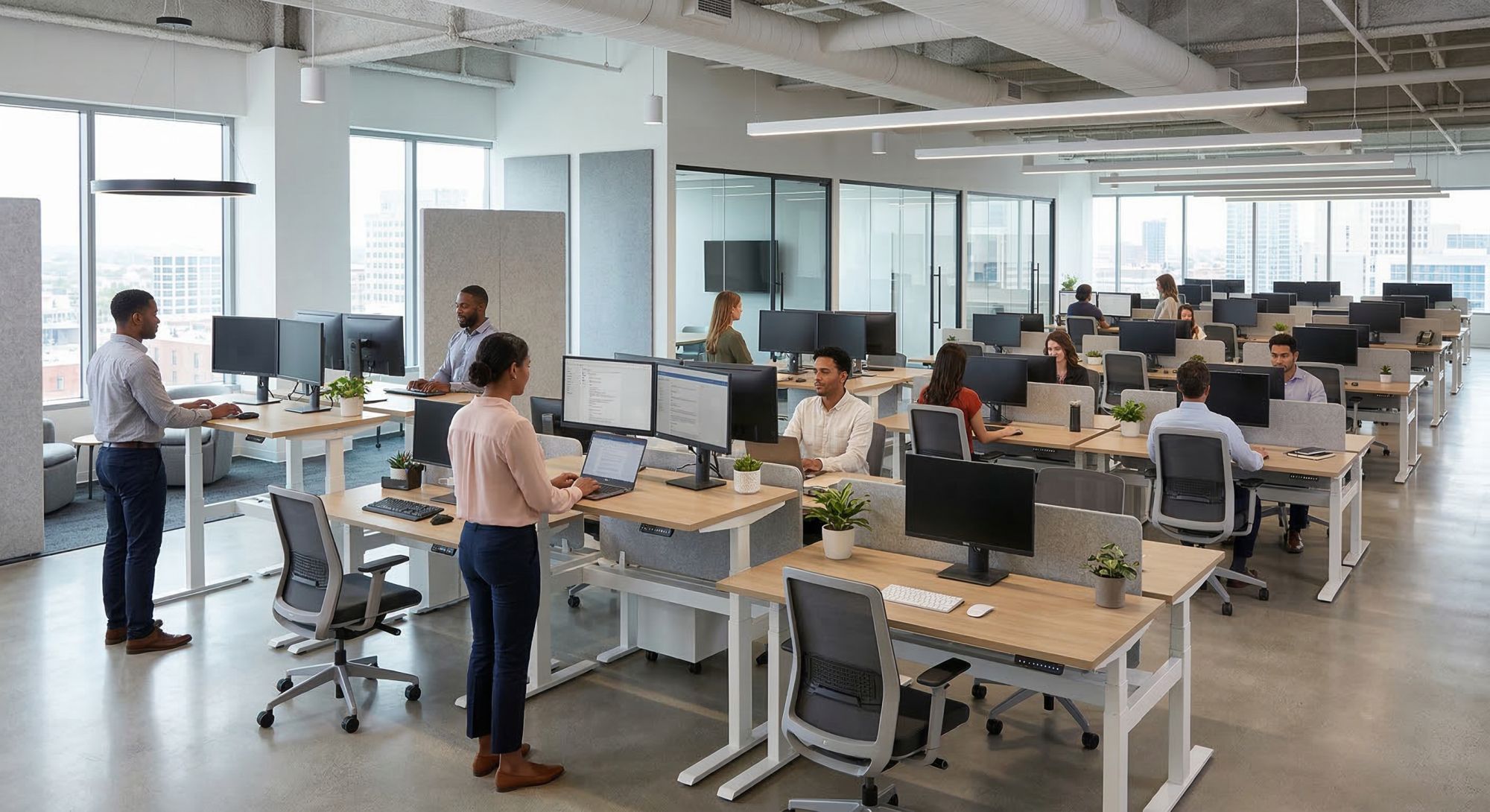
3.1. Absolute Structural Integrity (Anti-wobble) and the Dual Motor Advantage
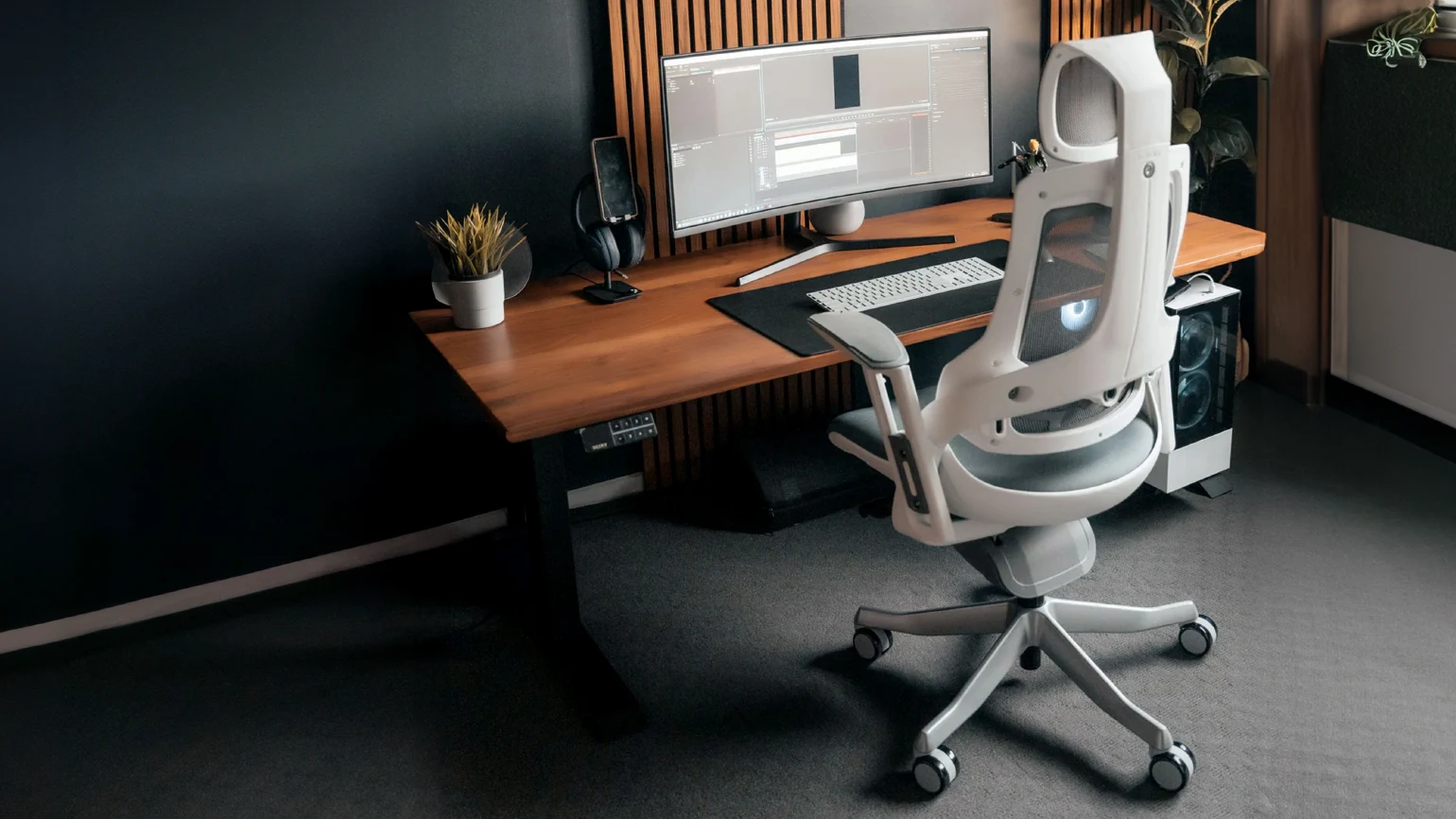
In the technology sector, a standard professional workstation is a heavy-duty environment. It typically supports a dual-monitor configuration (27 - 32 inches), articulating monitor arms, and an array of high-performance peripherals.
-
The Challenge: Budget-tier sit-stand desks are notoriously prone to lateral instability or "wobble" at elevated heights. This oscillation is a major disruptor for developers; even a slight vibration can break the tactile precision and cognitive concentration required during high-speed coding and rapid-fire input
-
The Solution: Enterprise-grade projects must prioritize a Dual Motor architecture. Integrated into both desk legs, this synchronized system supports a robust load capacity of 100 - 120kg. More importantly, it ensures the transition is fluid and operates at a whisper-quiet level (<50dB), preserving the acoustic focus of a high-performance office environment.
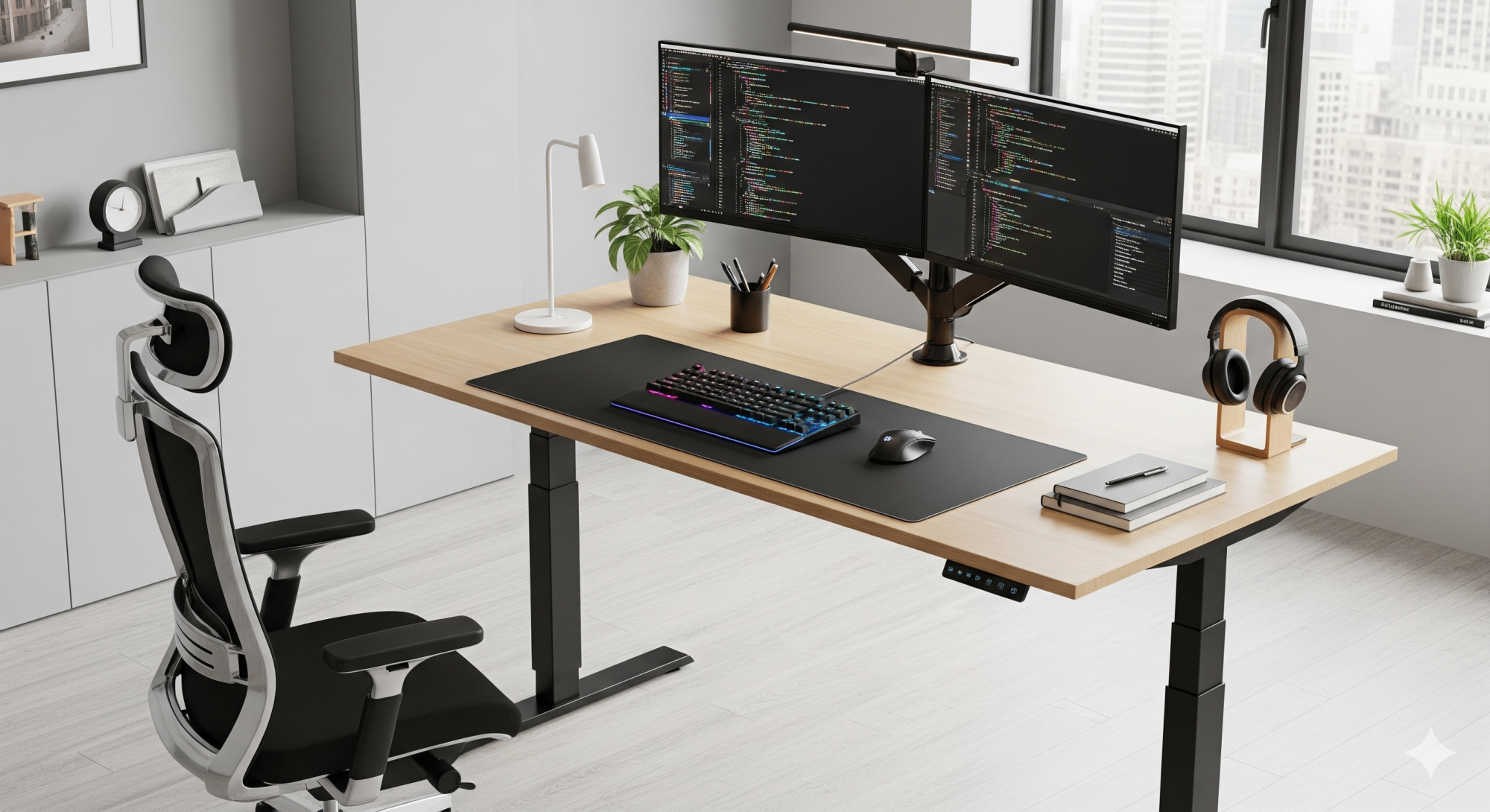
3.2. Professional Cable Management Systems
Tech professionals are notoriously averse to disorganized "cable spaghetti" - the tangle of power leads, DisplayPort cables, and mechanical keyboard wires. In a dynamic sit-stand environment, poor cable routing is more than an aesthetic issue; it poses a significant operational risk, as cables can become snagged, strained, or disconnected during height transitions.
-
Project Specification: High-tier workstation standards must include high-capacity integrated cable trays and articulating cable spines. This configuration ensures the clean, minimalist aesthetic required for modern Open Offices while providing a secure, protected pathway for all wiring. This "clean-tech" approach also allows IT technicians to perform hardware maintenance with maximum efficiency and zero clutter.
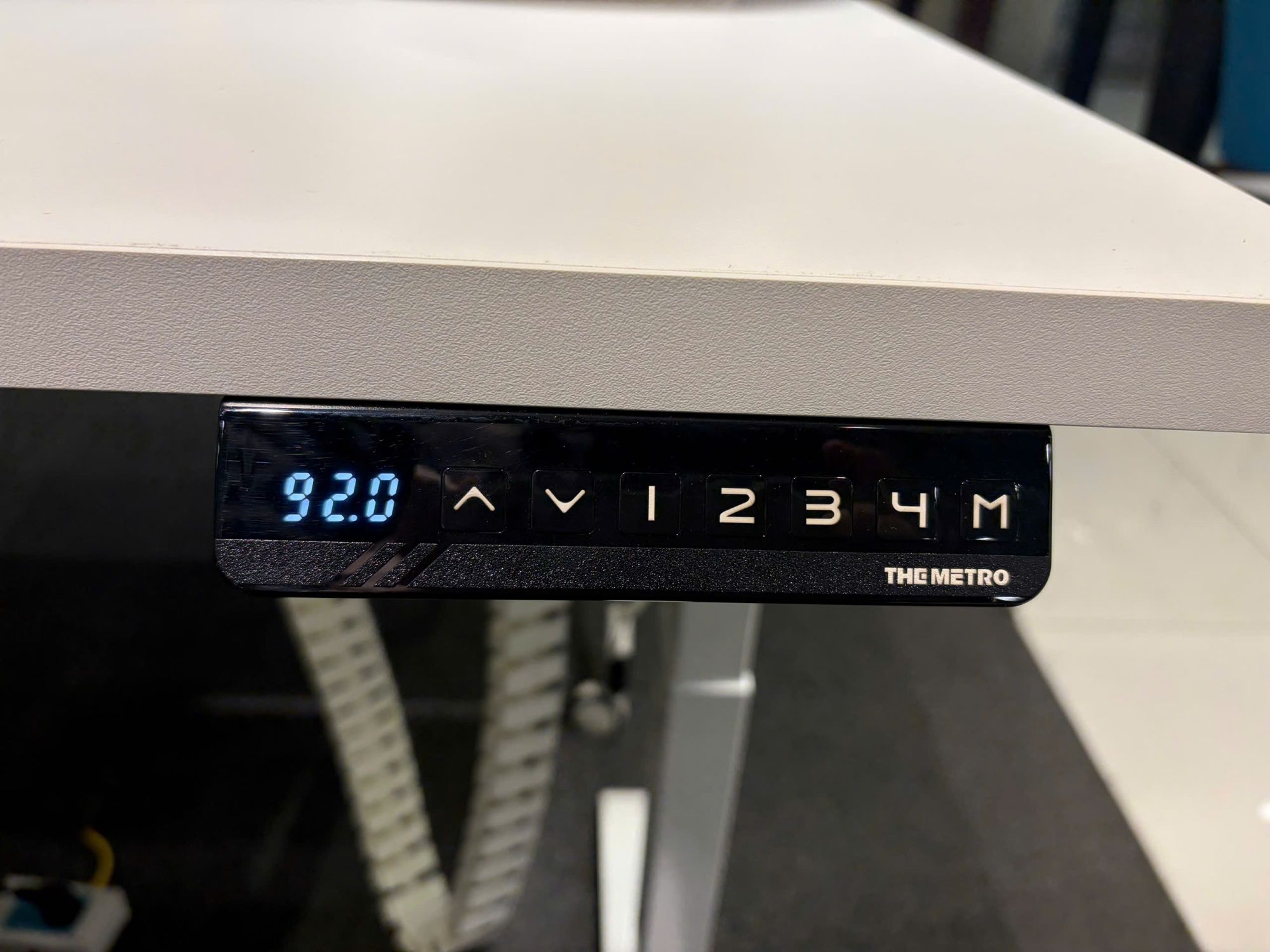
3.3. Intelligent Memory Presets
In a high-pressure IT environment, convenience is the primary catalyst for habit formation. If adjusting a desk is perceived as a manual chore, employees will inevitably revert to a sedentary, "locked-in" posture.
-
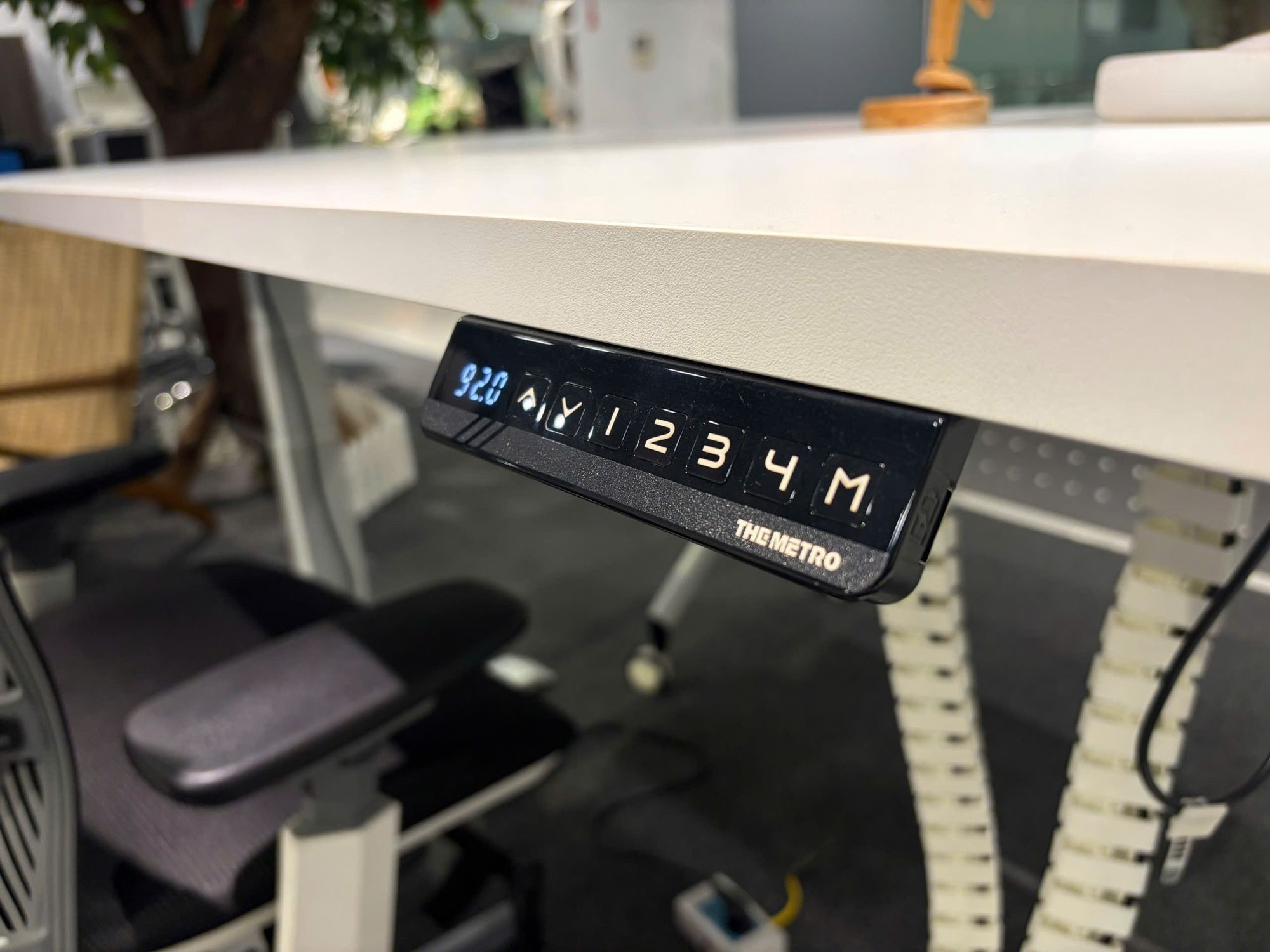
Optimizing the User Journey: To drive consistent usage, the control interface should feature 3 to 4 memory presets. Once the ideal sitting and standing elevations are calibrated, the transition requires only a single touch and approximately 3 seconds. This seamless automation is critical for preventing "Context Switching" - ensuring that a developer’s logical flow and cognitive momentum remain entirely unbroken even as they shift their physical state.
4. The Economic Equation: Strategic Investment vs. Operating Expense?
Many organizations habitually categorize office furniture as a mere "Operating Expense (OPEX)" - a line item to be minimized. However, for technology-driven enterprises, smart furniture is fundamentally an investment in the core means of production.
When evaluating a smart sit-stand desk against a traditional workstation, the true differentiator is not the initial acquisition cost, but the strategic surplus value and long-term yields generated by a healthier, more engaged workforce.
4.1. Strategic Value Comparison Table
4.2. ROI Analysis: The "3-Day Salary" Metric
To secure budget approval, leadership must look beyond the sticker price and analyze the underlying financial logic:
-
Investment Benchmarking: A premium project-grade sit-stand desk costs approximately the equivalent of three days' salary for a Senior Developer (based on an average monthly salary of 60 - 80 million VNĐ).
-
The Break-even Point: In the tech sector, a senior contributor's hour is high-value currency. If a smart desk facilitates just 15 minutes of additional "Deep Work" per day - by mitigating the distractions of back pain or physical lethargy - the enterprise achieves a full return on investment within 10 - 12 months.
-
Risk Mitigation Value: The cost to recruit and onboard a replacement for a departed engineer typically ranges from 6 to 9 months of that position's salary. Investing in ergonomic infrastructure is the most cost-effective solution with the highest emotional resonance for talent retention.
Investing in smart desking is not a furniture purchase; it is a manifestation of a Human-centric corporate culture. When employees perceive that leadership is invested in their physical longevity, commitment and loyalty increase naturally - an intangible value that serves as the bedrock of every successful tech firm.
4.3. Reducing Attrition: The Cost-Efficiency of Environment
In the IT industry, the "all-in" cost of a new hire (headhunting fees, interview hours, and onboarding ramp-up) is a significant drain on resources. Providing a "Silicon Valley-grade" workspace is one of the most efficient ways to upgrade the daily employee experience, fostering a sense of belonging and professional respect.
Bottom Line: If an organization is willing to spend hundreds of thousands of dollars on servers and software licenses, the decision to "upgrade" the health of the humans operating those syst
5. Conclusion: From "Providing a Seat" to "Investing in an Experience"
Implementing smart sit-stand desks is not merely a trend in office aesthetics; it is a strategic maneuver to transform the workspace into a true "Energy Station." For IT and Tech enterprises, where creativity and cognitive agility are the primary drivers of profit, protecting the workforce's health is the ultimate form of asset protection.
From an executive's perspective, every smart desk installed represents:
-
A commitment to a modern, humanistic corporate culture.
-
A science-based solution for performance optimization.
-
A highly efficient talent risk management tactic.
The prosperity of an enterprise in the digital age is not found solely in elegant code, but in a healthy, resilient team empowered to break boundaries. It is time to shift the mindset from "furnishing an office" to "engineering a high-performance experience."