Metal-Leg Work Desks and Wooden Desks: A Corporate Decision-Making Perspective
Are iron leg desks more durable or wooden desks more luxurious?
This is a classic question when setting up an office. Each material has its own language: Wood represents stability and tradition; Iron represents flexibility and modernity.
For SME businesses, where every capital investment needs to be profitable, choosing the wrong material can lead to unnecessary waste. Let's join The City to put these two popular lines of office work desks on the scale to find the winner in the race of durability and cost.
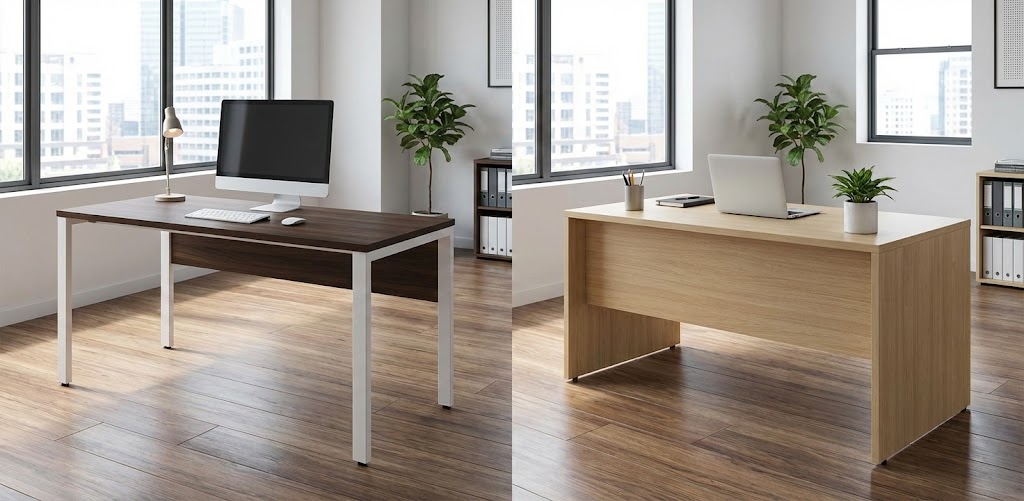
In today’s modern corporate environment, a work desk is no longer just a piece of furniture for daily tasks. For large-scale organizations, it represents a long-term investment that directly impacts operational efficiency, spatial identity, and employee experience.
When considering the two most common options—metal-leg work desks and wooden desks—the key question is no longer simply “which one looks better,” but rather “which option is more durable and better suited to a modern, professional office.”
1. Metal-Leg Work Desks and Wooden Desks: What Criteria Should Businesses Use to Choose?
In the premium office furniture segment, both metal-leg work desks and wooden desks are designed to meet the durability requirements of corporate environments. When material quality, manufacturing processes, and finishing standards are already assured, the difference between these two desk types no longer lies in how long they last, but in how well they align with the way a business organizes, operates, and evolves its workspace.
In practice, large enterprises tend to evaluate desks based on criteria such as layout flexibility, scalability for large-scale deployment, impact on office experience and brand image, and long-term investment efficiency. These factors help determine which desk type is better suited to each office model, rather than relying solely on comparisons of materials or aesthetics.
2. Overview of Two Common Desk Types in Today’s Offices
2.1. Metal-Leg Work Desks
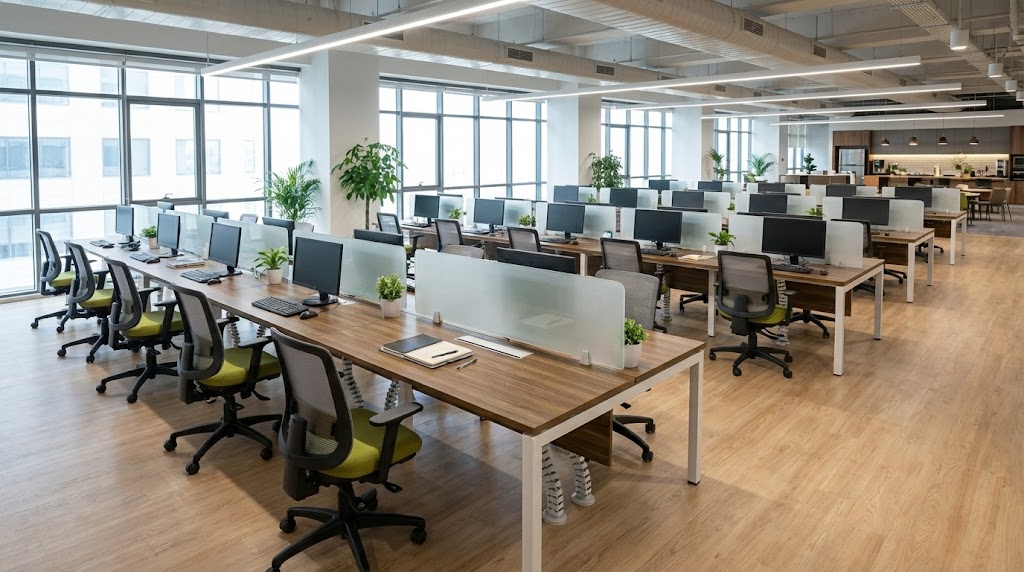
Premium metal-leg work desks typically feature precision-engineered metal frames, securely connected to the desktop and finished with carefully treated surfaces. The user experience emphasizes stability, cleanliness, and consistency, making them well suited to high-intensity work environments with a large number of users.
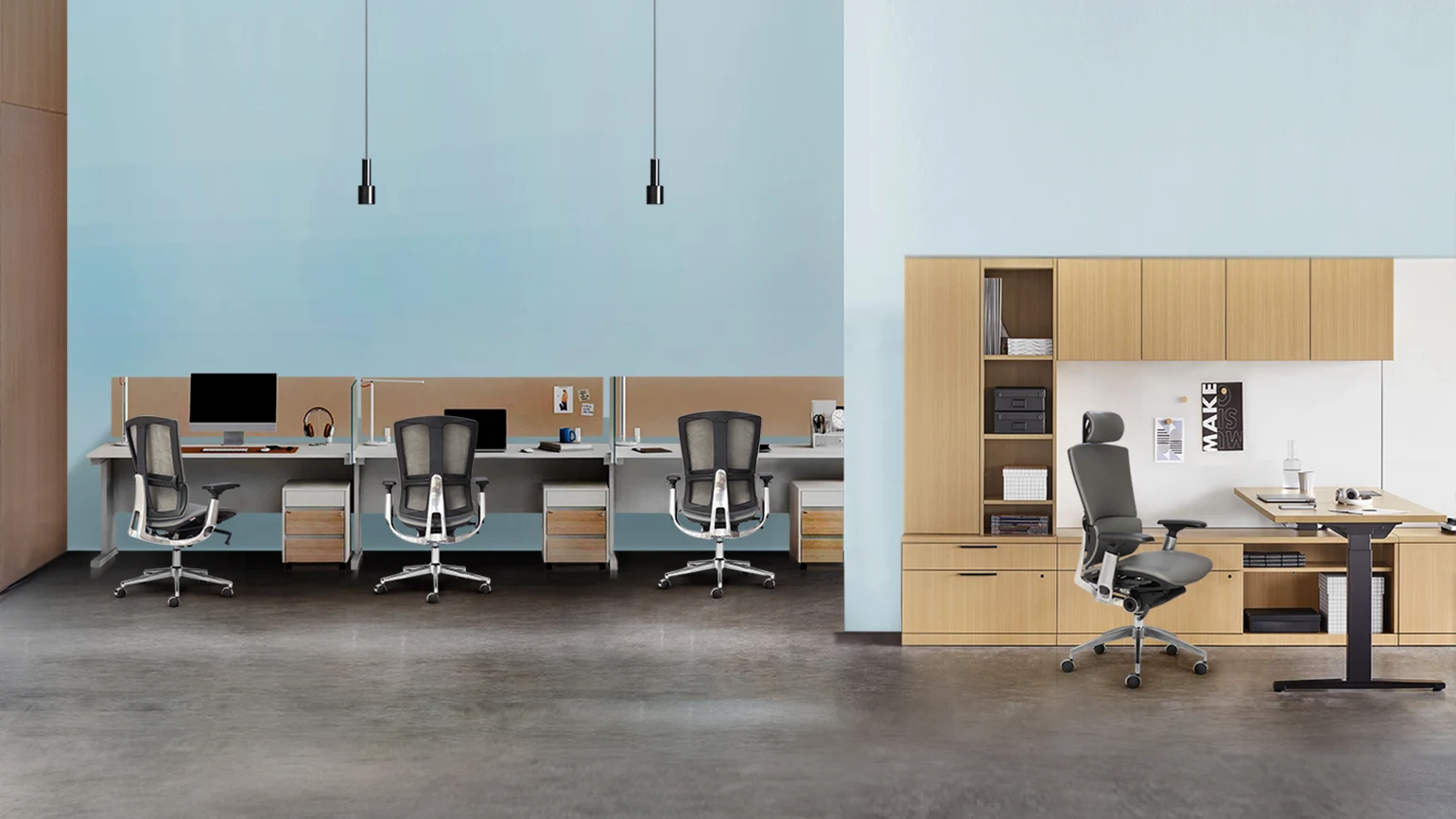
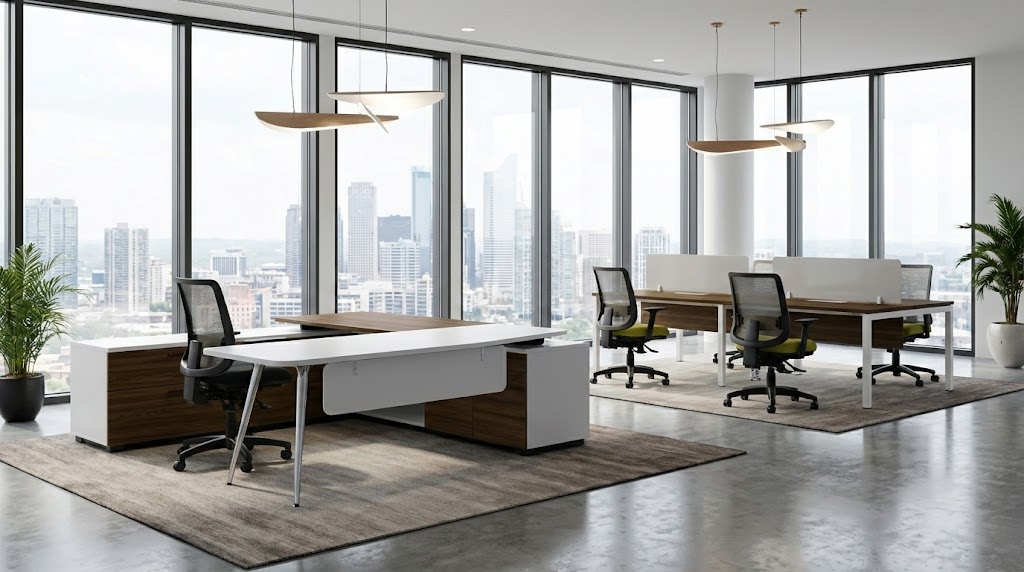
In open-plan or hybrid office models, metal-leg desks often serve as the structural foundation of the overall spatial layout. Their modular design allows easy integration with partitions, storage units, and office accessories, creating a flexible workspace that can be adjusted as the organization grows or changes.
The key value of metal-leg desks lies in their ability to be standardized and deployed consistently at scale. This enables businesses to better control investment costs, implementation timelines, and potential risks when expanding or restructuring office spaces.
2.3. Wooden Work Desks
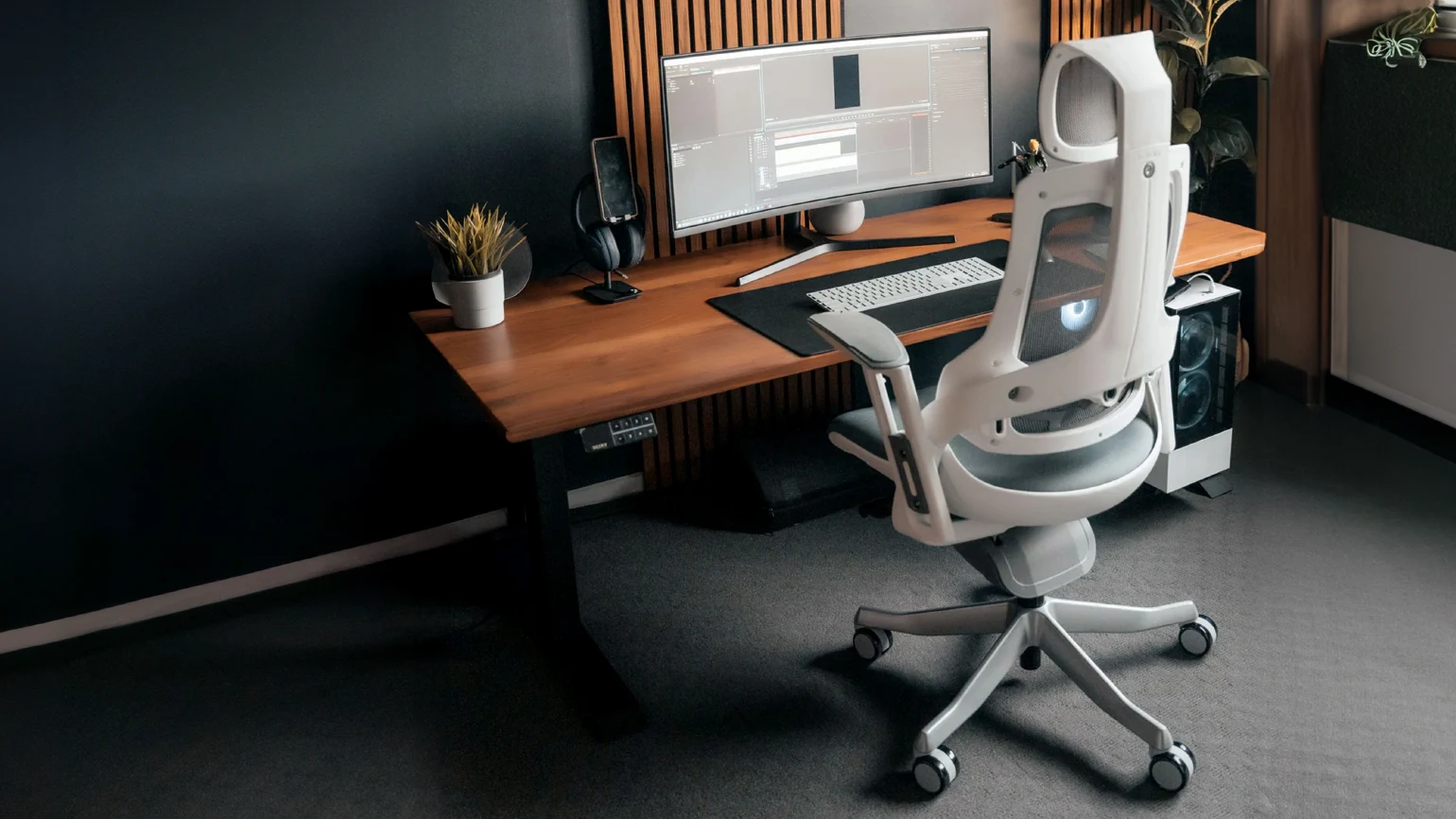
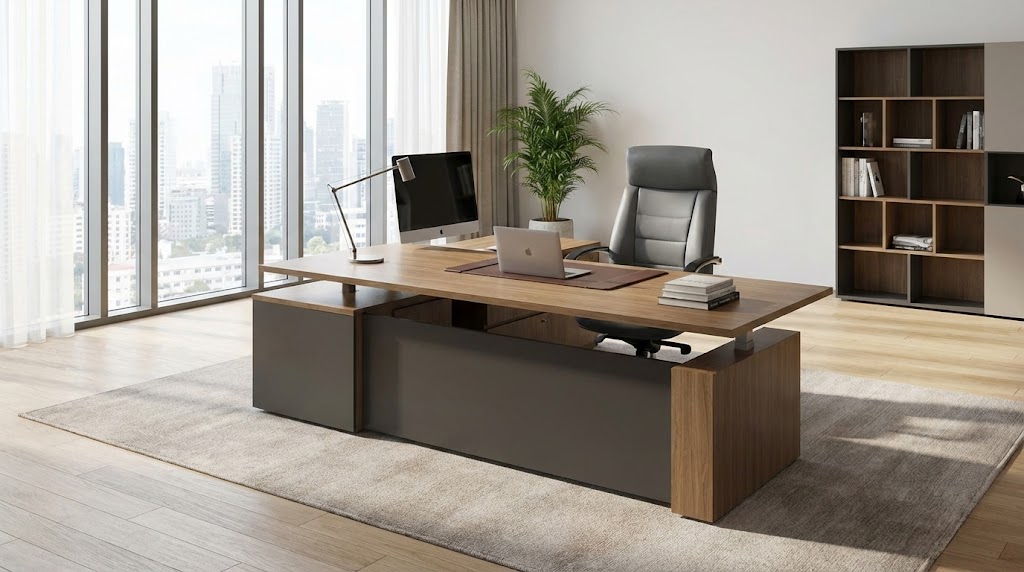
Premium wooden desks use wood that has been carefully treated for moisture control and structural stability, ensuring reliable long-term performance. The experience they offer is warmer, more refined, and more expressive, creating a clear spatial distinction from industrial-style designs.
In areas such as executive offices, management rooms, or reception spaces, wooden desks are often chosen to convey corporate style, culture, and status. These desks have strong representative value, helping create a lasting impression and a professional atmosphere.
Wooden desks are best suited to spaces with stable layouts and limited changes. When placed in the right context, they maintain their aesthetic value over time and enhance long-term workplace experience.
3. Comparing Metal-Leg and Wooden Desks in Real-World Use
3.1. Operational Flexibility and Scalability
In environments where layouts frequently change or expansion is expected, metal-leg desks clearly demonstrate an advantage due to their modularity and adaptability. In contrast, wooden desks are better suited to fixed spaces where stability and consistency are prioritized.
3.2. Consistency and Standardization
Metal-leg desks can be easily deployed consistently across multiple areas or branches thanks to standardized designs. Wooden desks are typically used in a more selective manner, serving as focal points within the overall space rather than being applied on a large scale.
3.3. Aesthetic Experience and Spatial Emotion
Metal-leg desks convey a modern, streamlined feel focused on efficiency and productivity. Wooden desks, on the other hand, evoke a sense of elegance, warmth, and emotional depth, contributing to a more sophisticated office environment.
4. Which Desk Type Is More Suitable for Each Office Model?
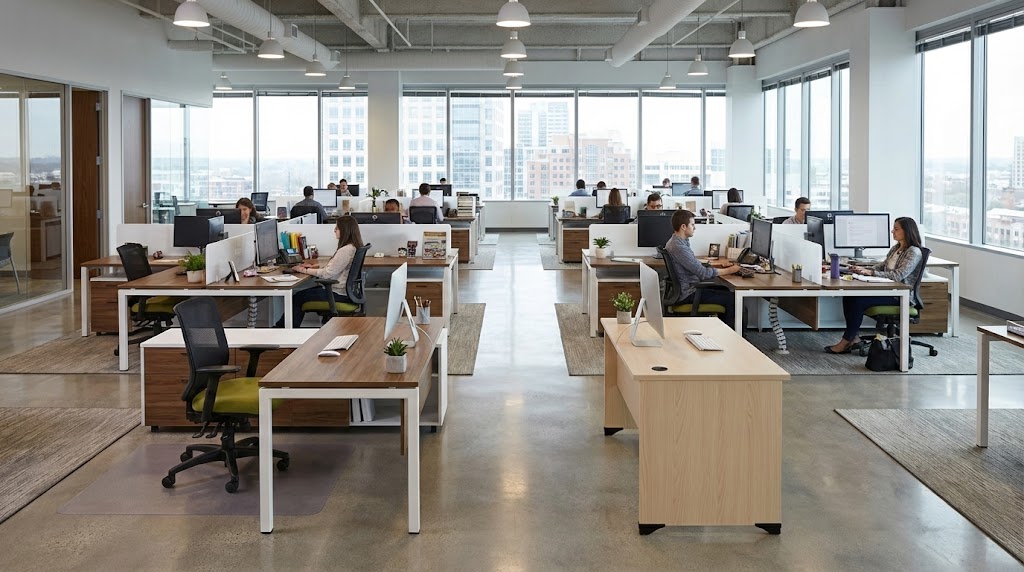
In practice, desk selection is closely tied to office layout and how each functional area operates. When metal-leg and wooden desks are placed within specific usage contexts, their differences become more apparent, helping businesses identify the most appropriate option for each part of the office.
Open-plan offices with large teams and frequent changes benefit more from metal-leg desks due to their standardization, consistency, and ease of expansion. This makes them an optimal choice for growing businesses or those planning future scale-ups.
Executive offices, management areas, and reception spaces are often better suited to wooden desks, where visual impact, elegance, and a sense of privacy are important. However, these desks are usually used in limited numbers and in a selective manner.
For enterprises with multiple branches or a need for spatial consistency, metal-leg desks allow for easier design standardization, ensuring uniformity across offices while optimizing long-term investment costs.
5. Conclusion: Choosing a Work Desk Is a Strategic Spatial Decision, Not Just a Material Choice
In the premium office furniture segment, both metal-leg work desks and wooden desks meet high standards for durability and quality. The fundamental difference lies in how businesses organize space, shape workplace experience, and prepare for future development.
Therefore, selecting work desks should be viewed as a strategic decision about space planning and operations, rather than a simple comparison of materials or outward appearance.