How to Choose the Right Reception Sofa for Any Office Lobby & Pantry Space
Turn the Pantry and Lobby areas into the 'heart' of the office with Soft Seating interior solutions.
In modern office design projects, Shared Spaces are taking up an increasing proportion. This is where corporate culture and concern for employee experience are most clearly demonstrated.
This article provides a professional perspective for Architects on how to use modern office sofa , stool chair , and lounge lines from The City to create flexible, aesthetic, and functionally optimized layouts
In contemporary office design, reception areas and pantry spaces are no longer treated as “just enough” functional zones. These are high-traffic areas that directly influence the experience of clients, partners, and internal teams alike. For architects and designers, the challenge is not simply providing seating, but organizing space in a way that feels emotionally cohesive, functionally sound, and consistent with the overall design concept. Within this context, the reception sofa becomes a key design element rather than just a piece of furniture.
1. When the reception area and pantry become experiential spaces
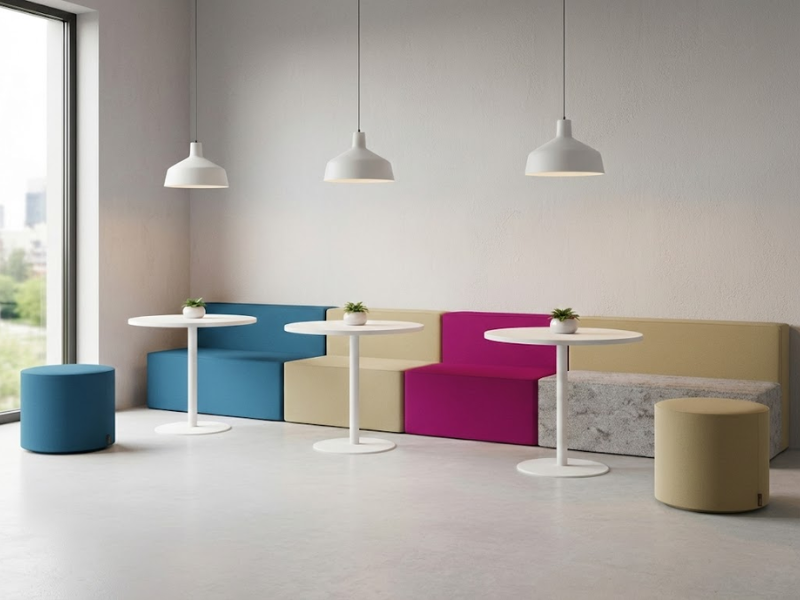
In the past, a reception area only needed to be neat and provide sufficient seating. Today, it represents the first brand touchpoint. Likewise, the pantry is no longer a secondary space but has evolved into an area for short breaks, quick interactions, and internal connection. How these two zones are organized clearly reflects a company’s design philosophy and workplace culture.
Within this overall composition, the sofa plays a role in setting the spatial rhythm. Its form, color, and placement directly affect perceptions of friendliness, professionalism, and openness.
2. The role of sofas across different office zones
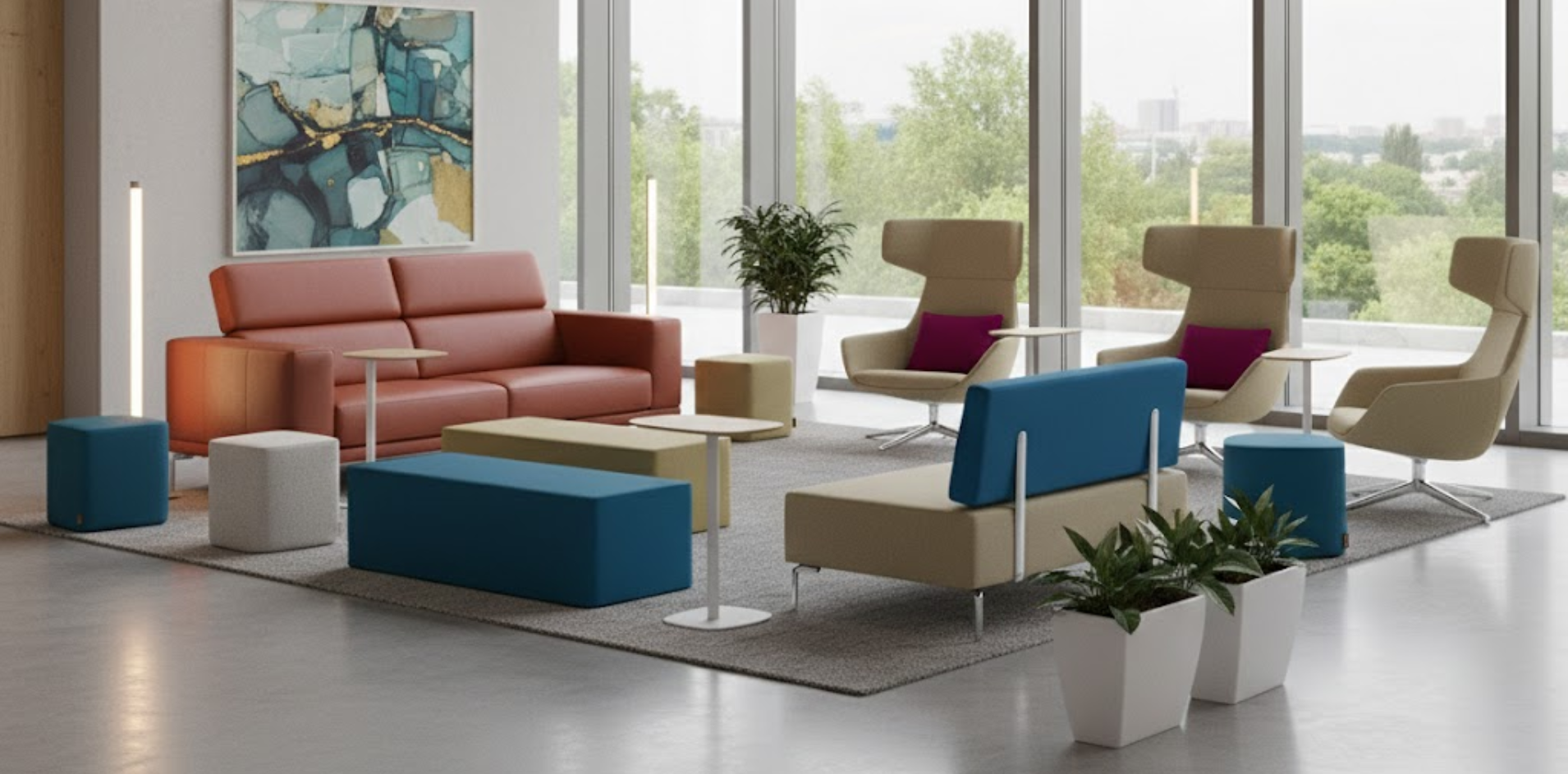
In reception areas, the sofa creates the first visual impression. A well-chosen reception sofa makes the space feel welcoming and approachable while maintaining the level of formality expected in a corporate environment. Beyond providing seating, it helps define the design language of the entire front-of-house area.
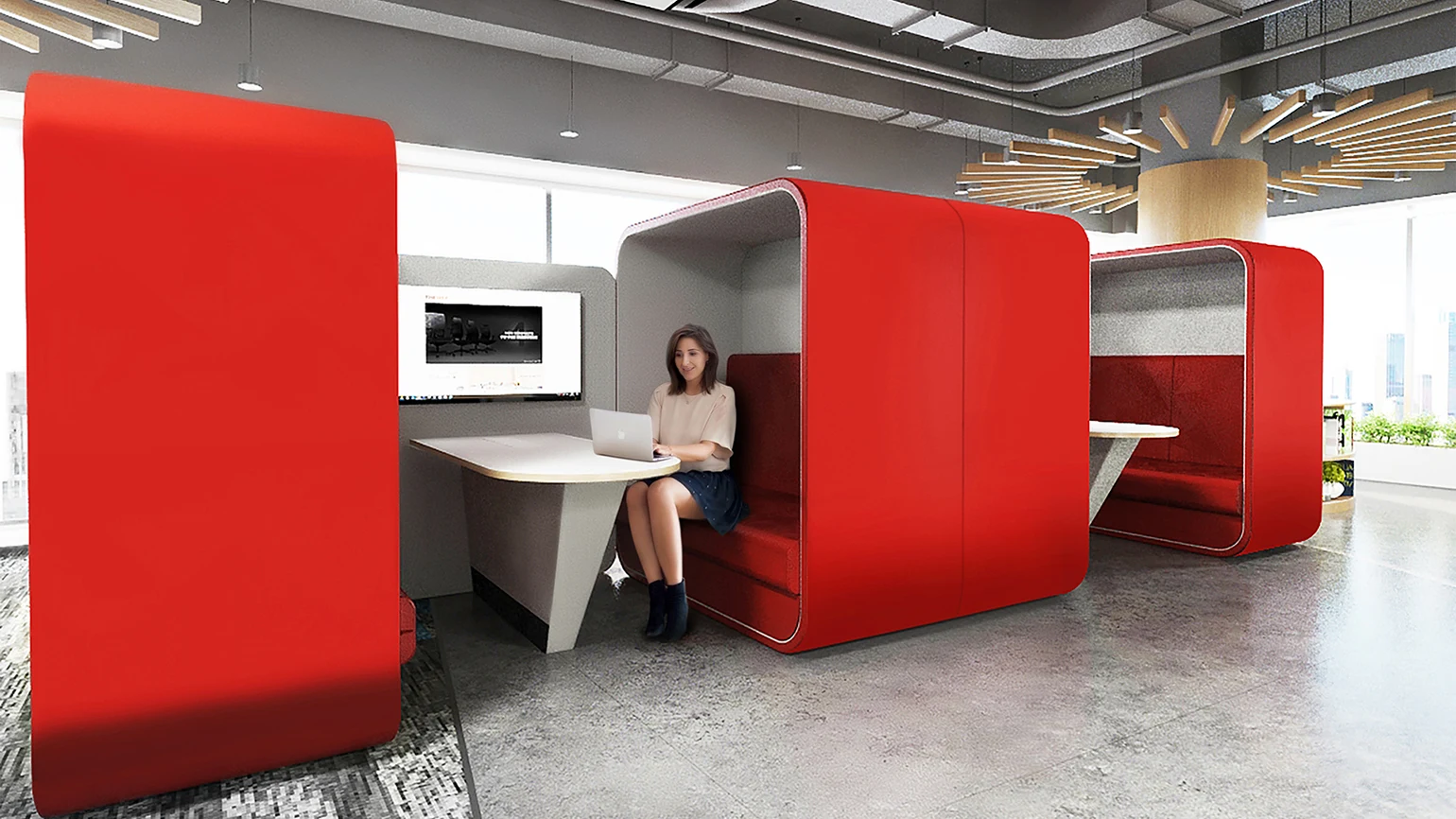
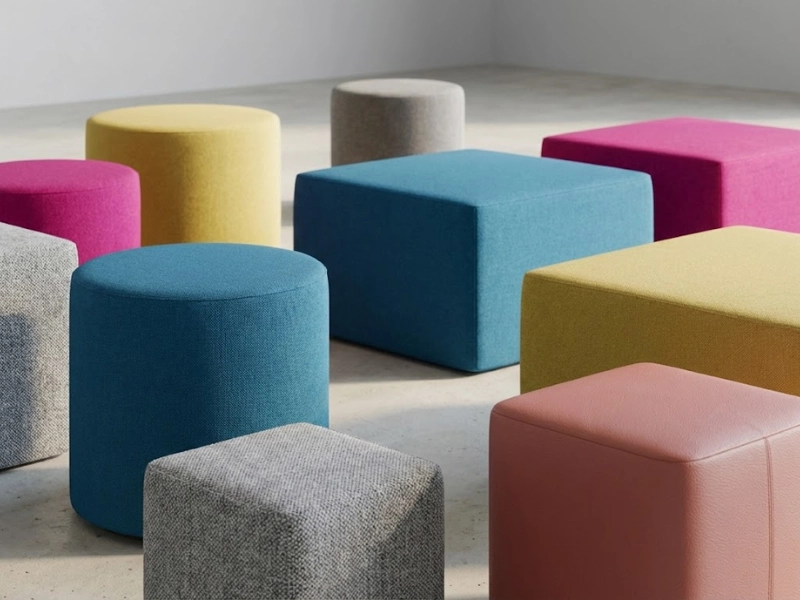
In pantry spaces, the sofa serves a different function. As a zone for short breaks and informal interaction, the sofa should feel more relaxed while remaining compact and durable. Combining sofas with ottomans increases flexibility and supports multiple usage scenarios throughout the day.
In open-plan layouts where reception and pantry areas intersect, the sofa functions as a spatial buffer. Thoughtful sofa placement helps differentiate functions without rigid partitions, preserving openness and visual continuity.
3. How architects and designers should approach selecting reception sofas
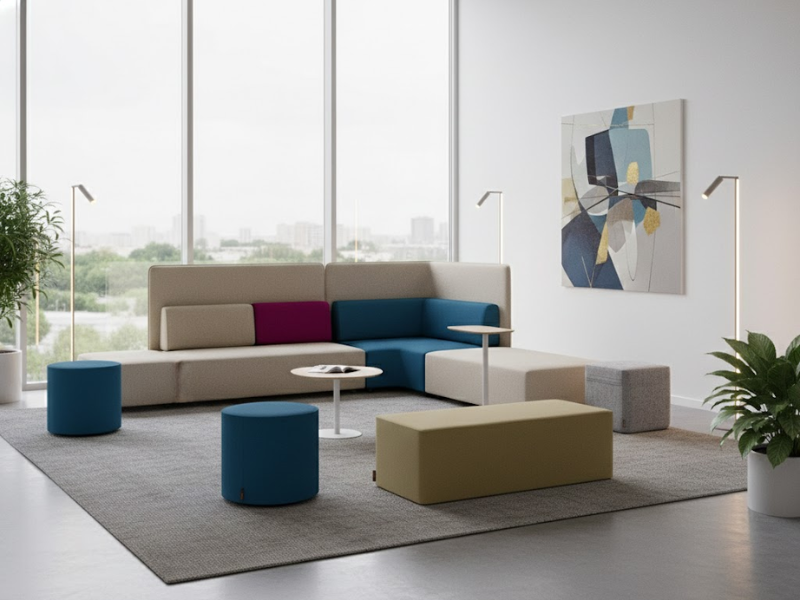
From a design perspective, selecting a reception sofa should begin with form. Bench sofas, modular sofas, and ottomans each support different layout strategies. Modular designs, in particular, allow architects to adapt configurations easily as floor plans or usage needs evolve.
- Color is the next critical factor: While colorful sofas can serve as strong focal points, they must be considered in relation to the overall color palette, materials, and lighting. Controlling the proportion of accent colors keeps the space visually engaging without compromising its corporate character.
- Material selection is equally important: Office environments demand sofas that are durable, easy to maintain, and capable of retaining their appearance over time. This directly impacts real-world user experience, not just first impressions.
- Flexibility is another essential criterion: The right sofa should be easy to move and reconfigure, allowing both designers and clients to adapt to future changes without replacing the entire furniture set.
4. Common mistakes architects make when selecting reception sofas
A frequent mistake is prioritizing visual appeal over actual usage context. Sofas that are too soft, too low, or designed for residential settings can undermine the professional image of an office reception area. Overuse of color is another issue, often resulting in visually cluttered spaces with no clear focal point. When the sofa becomes the “main character,” surrounding elements must be restrained to maintain balance.
Many projects also suffer from proportion issues due to insufficient consideration of sofa dimensions relative to reception or pantry area size. This can lead to cramped spaces, restricted circulation, or disjointed layouts. Additionally, failing to combine reception sofas with ottomans reduces flexibility and limits the space’s ability to support diverse real-world scenarios.
5. The City as a partner for office interior architects and designers
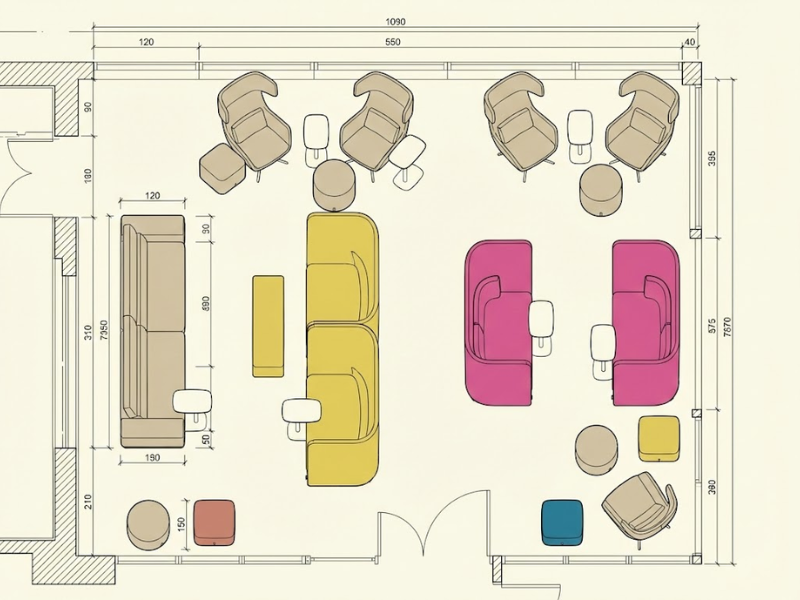
The City has developed an ecosystem of reception sofas and waiting seating solutions in collaboration with major brands, offering architects and designers a broad yet conceptually consistent range of options. Instead of sourcing products from scattered suppliers, designers can access a curated sofa collection suitable for both reception and pantry spaces within a single reference system.
Beyond products, The City provides catalogs, 3D images, and technical data that directly support the design and implementation process. These resources help architects build visualizations faster, minimize unnecessary revisions, and ensure greater alignment between design intent and actual products.
Throughout the project lifecycle, The City team works alongside architects to advise on sofa selection based on layout, design language, and project budget. This collaborative approach reduces the risk of incorrect product choices and strengthens the persuasiveness of design proposals when presented to investors or clients.
Architects and designers can register to receive The City’s reception sofa catalog and design resource package as a practical working tool for modern office projects HERE.